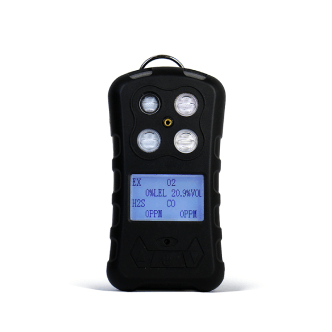
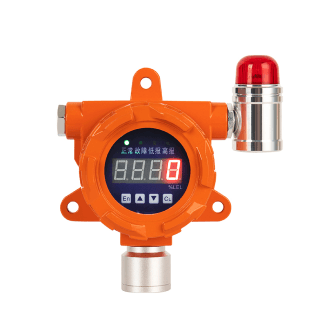
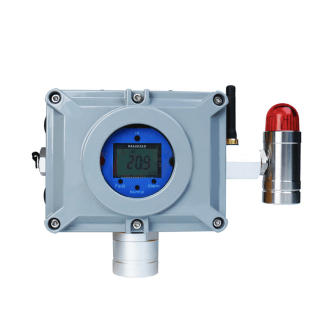










Common gas detectors employ various detection principles, including catalytic combustion, semiconductor, infrared, electrochemical, and photoionization (PID) methods.
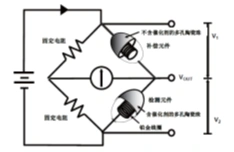
The catalytic combustion sensor utilizes the catalytic combustion reaction of combustible gases to heat an internal coil, thereby inducing a change in resistance to measure gas concentration.
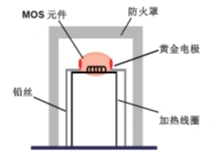
Semiconductor sensors measure gas concentration by detecting changes in resistance resulting from the adsorption of the sample gas onto a thin metal oxide film.
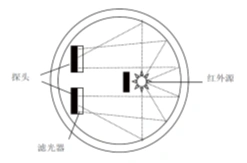
Infrared gas sensors operate on the principle of infrared spectral absorption, measuring gas concentration by analyzing the intensity changes of specific wavelengths of infrared light after it passes through the sample gas.
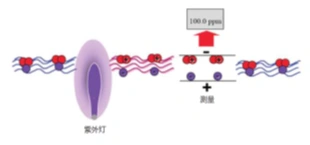
PID sensors utilize ultraviolet light to ionize gases, and measure gas concentration by detecting the charge generated by the ionized gas.
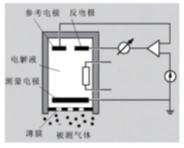
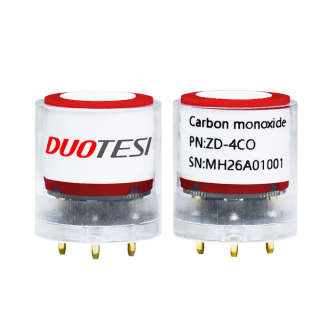
Electrochemical sensors operate by detecting the microcurrent generated during electrochemical gas reactions.