
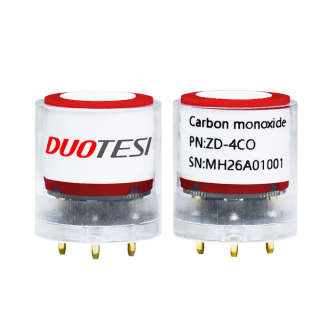










Cross-response refers to the characteristic of a gas sensor to respond to gases other than the target gas. Depending on the nature of how different gases interact with the sensor, the sensor’s output signal may sometimes weaken (negative cross-response) or sometimes strengthen (positive cross-response). Cross-response can interfere with the sensor’s measurement signal; particularly in the case of negative cross-response, it can attenuate the sensor’s response to the target gas, thereby delaying the instrument’s alarm—making it more hazardous. The cross-response coefficient (CF) is used to quantify the sensor’s cross-sensitivity; using the CF value, a sensor calibrated for one gas can directly measure the concentration of another gas, thereby eliminating the need to prepare numerous standard gases.

What is the cross-response of a sensor?
Share To:

Questions or Concerns?
Let Us Know!
Please feel free to submit your inquiry to us. our sales engineers will contact you in short time.
Contact Now!
Contact Us
Get In Touch With Us
Just fill out the form and Our professional team will contact you with in 24 hours to answer your questions and
provide full support and assistance.